Renata Stih & Frieder Schnock:
Orte des Erinnerns - Denkmal im Bayerischen Viertel
Places of Remembrance - Memorial in the Bavarian Quarter
Berlin-Schöneberg (1993)
 << download the new booklet
Holen Sie sich die iPhone-App für das Denkmal im Bayerischen Viertel
Get the App for your smartphone !

Mit der Smartphone-Kamera diesen QR-Code anvisieren,
zum Store wechseln und die kostenlose App herunterladen.
Focus with your smartphone camera on this QR code,
switch to the App store and download the App for free.
80 doppelseitige Schilder, Text & Bild | 80 double sided signs, image & text
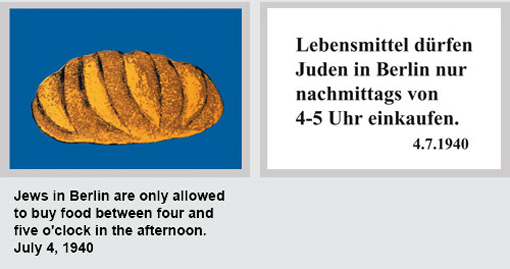
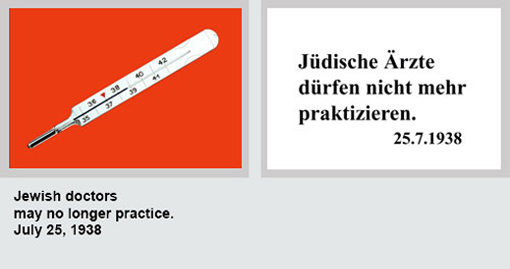
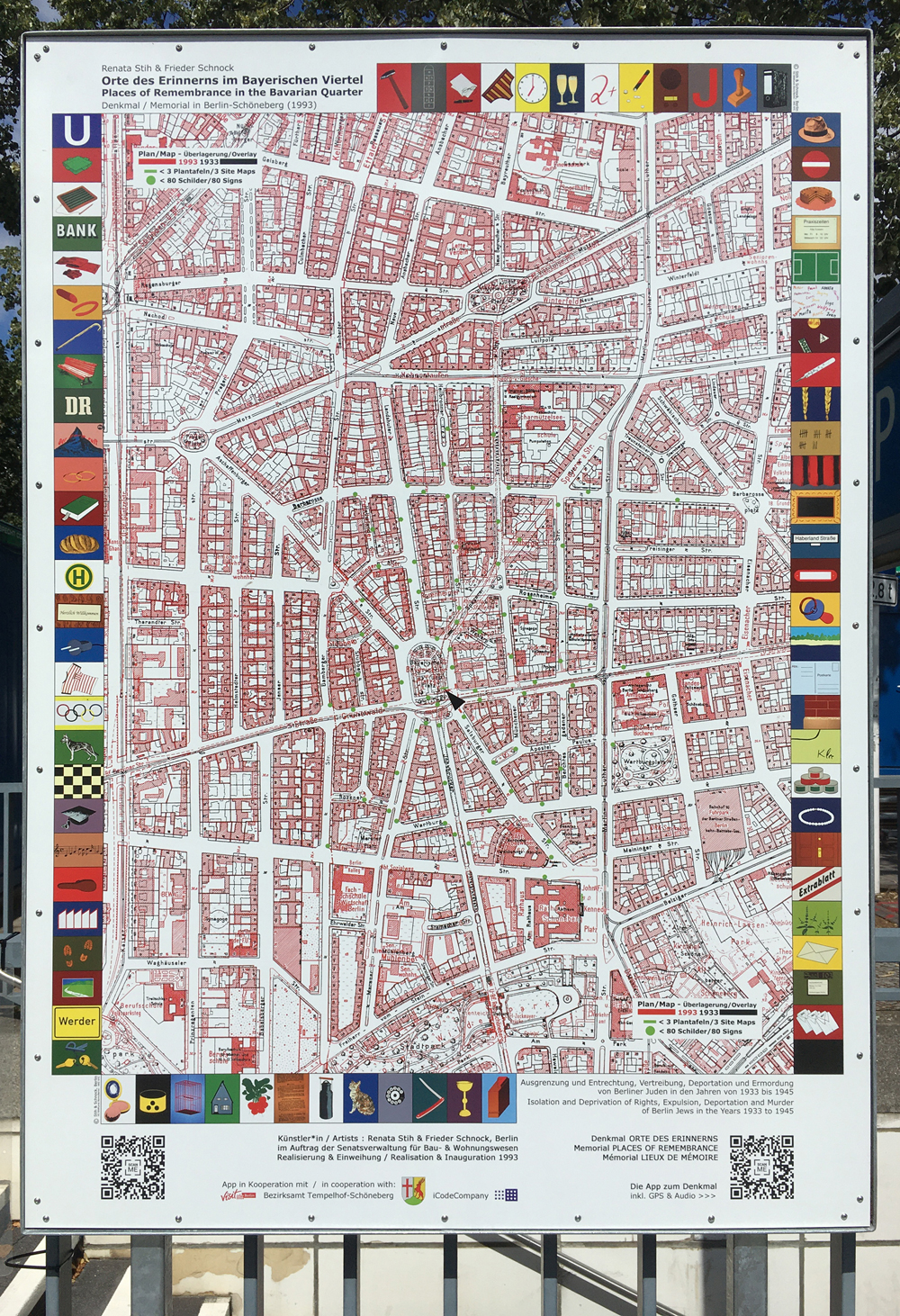
Orte des Erinnerns ist ein dezentralisiertes Denkmal im Bayerischen Viertel im Berliner Bezirk Schöneberg, das 1993 eingeweiht wurde. 80 doppelseitige Schilder sind an Lampenmasten montiert; auf der einen Seite mit einem Bildmotiv versehen, auf der anderen Seite verkürzte Texte mit anti-jüdischen Gesetzen und Verordnungen aus den Jahren 1933 bis 1945. Die Texte und Bilder auf den Tafeln konfrontieren die Passanten mit der fast vergessenen Geschichte dieses Viertels, wo Albert Einstein, Hannah Arendt, Gisele Freund und Carl Einstein einst lebten. Verteilt über das ganze Viertel verweist das Denkmal auf die täglichen Entbehrungen und die Entrechtung bis hin zur Deportation und Ermordung von Juden während der Nazi Zeit.
___________________________________________________________________________________
Renata Stih & Frieder Schnock: Places of Remembrance - Memorial in the Bavarian Quarter in Berlin-Schöneberg (1993)
Places of Remembrance / Orte des Erinnerns is a decentralized memorial in the Bavarian Quarter in the Schoeneberg district of Berlin, which was inaugurated in 1993. 80 double-sided signs are put up on lampposts, depicting images on the one side and on the reverse side condensed versions of anti-Jewish Nazi rules and regulations passed between 1933 and 1945.Together, the words and images force passers-by to remember the almost-forgotten history of this neighborhood, where Albert Einstein, Hannah Arendt, Gisele Freund and Carl Einstein once lived. Dispersed throughout the area the memorial becomes a metaphor of the daily deprivation of rights and humiliation, leading to deportations and mass murder of Jews during the Nazi era .
Zum Denkmal / to the memorial in Berlin
mit der BVG / by public transportation:
U7 oder/or U4, Haltestelle / stop at "Bayerischer Platz"
> Texte mit der App in 16 Sprachen / Translations in 16 Languages with the App
Stih&Schnock_new_BV-App_end-of-Dec-2024_.jpg)
>>> Straka, Barbara. "Normalität des Schreckens" (1993) PDF
>>> Atkinson, Rick. "Art of Darkness: Berlin's Holocaust Reminder", Washington Post, April 15, 1994 PDF
>>> Wiedmer, Caroline. "Remembrance in Schöneberg" (1996) PDF
>>> Knight, Christopher. "Concrete, yet not". L.A. Times, June 25, 2005
>>> Perman, Stacy: "The Right Questions", Tablet July 25, 2007
>>> Johnson, Ian. "Berlin’s Most Unsettling Memorial". The New York Review of Books Blog, June 2013
>>> Pines, Giulia. A Walk Among Signs: "Berlin's Places of Remembrance", Panorama No. 5, Summer 2018
>>> Wirth, Elisabeth. 80x50cmx70cm / Zu Besuch an den Orten des Erinnerns im Bayerischen Viertel, taz blog, 2020/06/11
Wir machen sehr gerne Vorträge und Führungen zum Denkmal „Orte des Erinnerns“.
Durch Ihre Teilnahme stimmen Sie zu, dass die Fotos der Veranstaltung evtl. veröffentlicht werden.
We are happy to give talks and guided tours of the “Places of Remembrance” memorial.
By participating, you agree that the photos of the event may be published.
contact: denkmal@berlin.de
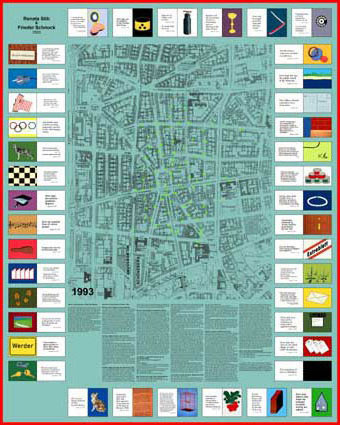
Complete signs and map
in the following publication

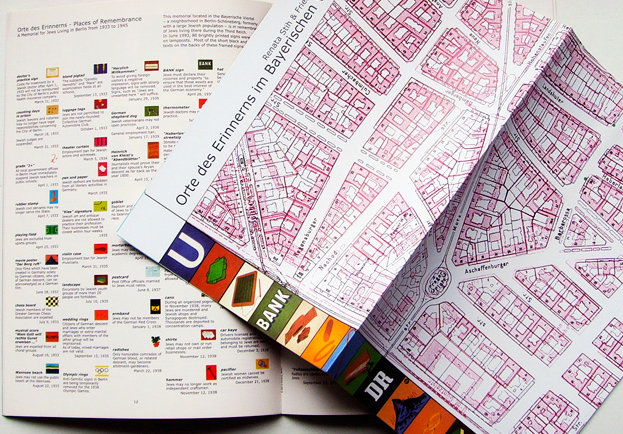
Renata Stih & Frieder Schnock: Orte des Erinnerns / Places of Remembrance in Berlin
5. revised edition 2017 (in German + English) available
ISBN 9783000302848
€ 9,80 (inkl. Briefversand nach Deutschland = € 11,60.- / Letter International = € 13,50.- or $ 16.- shipping costs incl.)
- individual orders / Verlagsauslieferungen / booksellers please order at <office(at)stih-schnock.de>
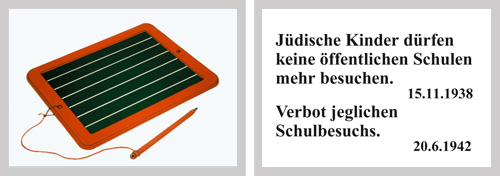
Jewish children are expelled from public schools.
November 15, 1938
Prohibition of all school attendance.
June 20, 1942
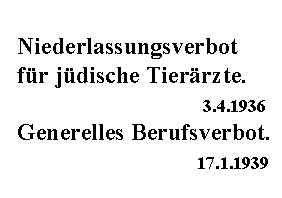

Jewish veterinarians may not open practices.
April 3, 1936
General employment ban.
January 17, 1939
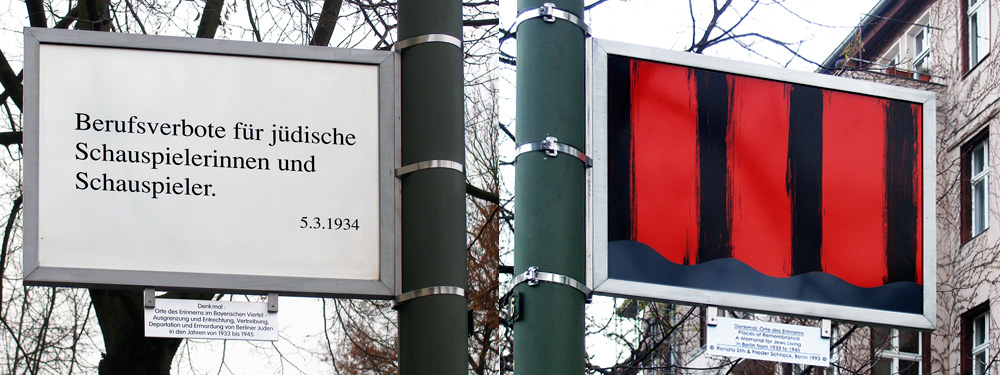
Employment ban for Jewish actresses and actors.
March 5, 1934
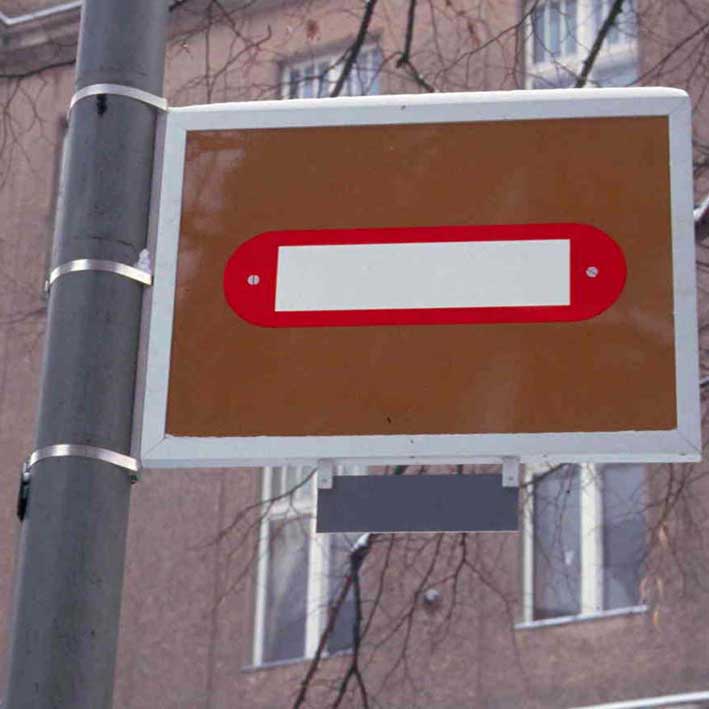
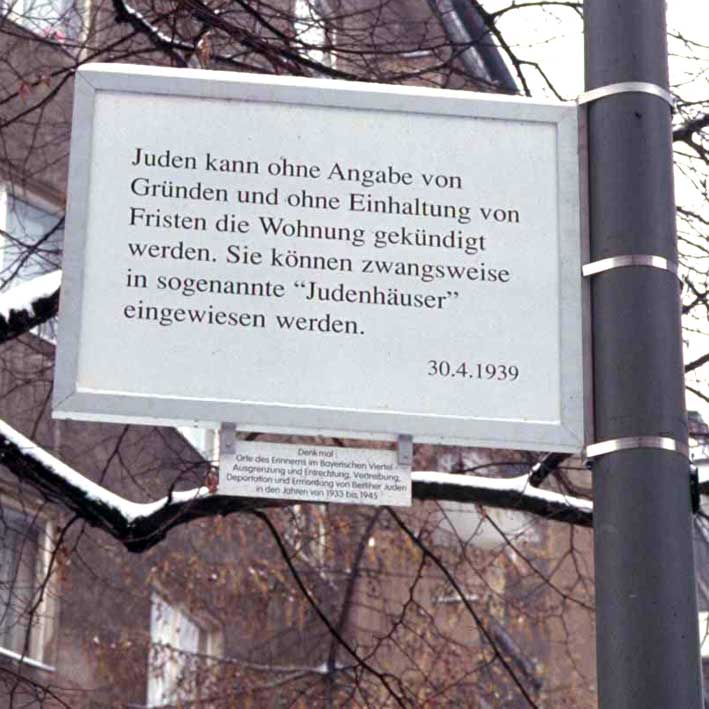
Rental agreements with Jews can be terminated without
reason and without keeping within set legal deadlines.
Jews can be sent to so-called "Jew Houses."
April 30, 1939
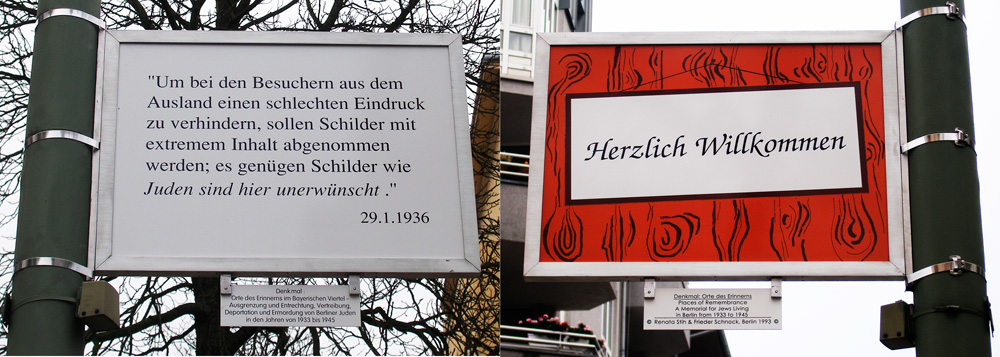
To avoid giving foreign visitors a negative impression,
signs with strong language will be removed.
Signs, such as "Jews are unwanted here " will suffice.
January 29, 1936
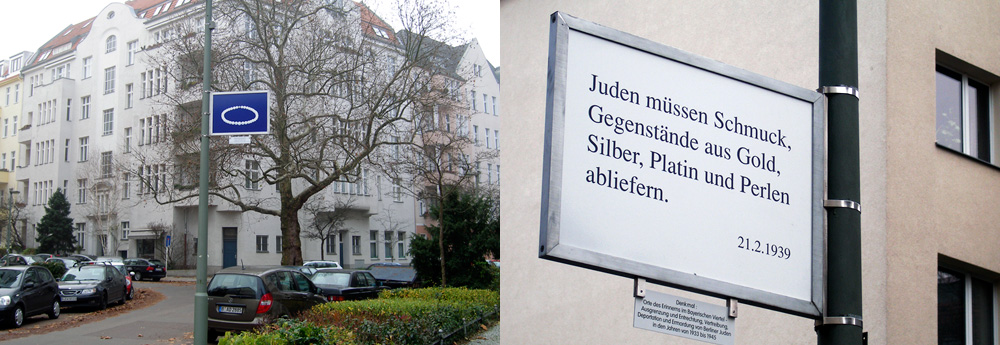
Jewelry, items made of gold,
silver,
or platinum, and pearls belonging to
Jews are to be turned to the State.
February 21, 1939

16 nicht realisierte Entwürfe für weitere Doppelschilder, 1992/93 - Some additional proposals for more than the 80 double sided signs in the Bavarian Quarter, 1992/93
all images & texts © Renata Stih & Frieder Schnock, Berlin 2026 - VG Bild-Kunst Bonn/Berlin - Artists Rights Society, New York City
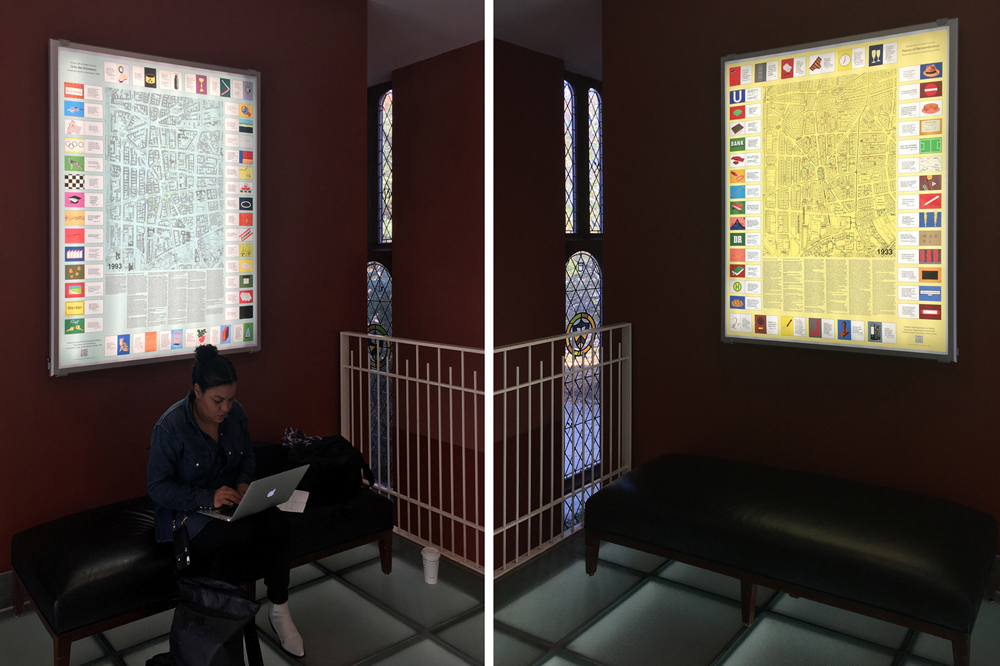
"Places of Remembrance" lightboxes
shown at The Jewish Museum NYC in 2003/4
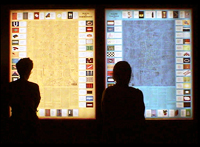
extended loan by Renata Stih & Frieder Schnock to the
Department of German / Princeton University Art Museum
installed at East Pyne (see PU campus map), entrance hall, 2. floor
click here for an audio file (1,5 MB)

 click here
for more details
click here
for more details
25 Jahre Denkmal „Orte des Erinnerns“ in Berlin-Schöneberg
Rede des Staatssekretärs für Kultur, Dr. Torsten Wöhlert, am 28.10.2018 > PDF
Datenschutzerklärung / Privacy Policy / Disclaimer
> see below / siehe unten, go to the end of this page
Die Erfassung des aktuellen User-Standortes dient ausschließlich der Anzeige
der aktuelle Position auf einer Karte und wird nur zur Orientierung angezeigt.
The recording of the current user location serves exclusively to display
the current position on a map and is only displayed for orientation.
Datenschutzerklaerung / PrivacyPolicy / Disclaimer:
DATENSCHUTZHINWEISE
I. Informationen über die Verarbeitung Ihrer Daten gemäß Art. 13 der Datenschutz-Grundverordnung (DS-GVO)
1. Verantwortlicher und Datenschutzbeauftragter
Verantwortlich für diese Website ist
Stih & Schnock GbR, Potsdamer Str. 105, 10785 Berlin, +49 (0)30 265 2665, mail (at) stih-schnock .de
2. Daten, die für die Bereitstellung der Website und die Erstellung der Protokolldateien verarbeitet werden
a. Welche Daten werden für welchen Zweck verarbeitet?
Bei jedem Zugriff auf Inhalte der Website werden vorübergehend Daten gespeichert, die möglicherweise eine Identifizierung zulassen. Die folgenden Daten werden hierbei erhoben:
- Datum und Uhrzeit des Zugriffs
- IP-Adresse
- Hostname des zugreifenden Rechners
- Website, von der aus die Website aufgerufen wurde
- Websites, die über die Website aufgerufen werden
- Besuchte Seite auf unserer Website
- Meldung, ob der Abruf erfolgreich war
- Übertragene Datenmenge
- Informationen über den Browsertyp und die verwendete Version
- Betriebssystem
Die vorübergehende Speicherung der Daten ist für den Ablauf eines Websitebesuchs erforderlich, um eine Auslieferung der Website zu ermöglichen. Eine weitere Speicherung in Protokolldateien erfolgt, um die Funktionsfähigkeit der Website und die Sicherheit der informationstechnischen Systeme sicherzustellen. In diesen Zwecken liegt auch unser berechtigtes Interesse an der Datenverarbeitung.
b. Auf welcher Rechtsgrundlage werden diese Daten verarbeitet?
Die Daten werden auf der Grundlage des Art. 6 Abs. 1 Buchstabe f DS-GVO verarbeitet.
c. Gibt es neben dem Verantwortlichen weitere Empfänger der personenbezogenen Daten?
Die Website wird bei IONOS SE, Elgendorfer Str. 57, 56410 Montabaur gehostet. Der Hoster empfängt die oben genannten Daten als Auftragsverarbeiter.
d. Wie lange werden die Daten gespeichert?
Die Daten werden gelöscht, sobald sie für die Erreichung des Zwecks ihrer Erhebung nicht mehr erforderlich sind. Bei der Bereitstellung der Website ist dies der Fall, wenn die jeweilige Sitzung beendet ist. Die Protokolldateien werden maximal bis zu 24 Stunden direkt und ausschließlich für Administratoren zugänglich aufbewahrt. Danach sind sie nur noch indirekt über die Rekonstruktion von Sicherungsbändern verfügbar und werden nach maximal vier Wochen endgültig gelöscht.
3. Betroffenenrechte
a. Recht auf Auskunft
Sie können Auskunft nach Art. 15 DS-GVO über Ihre personenbezogenen Daten verlangen, die wir verarbeiten.
b. Recht auf Widerspruch
Sie haben ein Recht auf Widerspruch aus besonderen Gründen (siehe unter Punkt II).
c. Recht auf Berichtigung
Sollten die Sie betreffenden Angaben nicht (mehr) zutreffend sein, können Sie nach Art. 16 DS-GVO eine Berichtigung verlangen. Sollten Ihre Daten unvollständig sein, können Sie eine Vervollständigung verlangen.
d. Recht auf Löschung
Sie können nach Art. 17 DS-GVO die Löschung Ihrer personenbezogenen Daten verlangen.
e. Recht auf Einschränkung der Verarbeitung
Sie haben nach Art. 18 DS-GVO das Recht, eine Einschränkung der Verarbeitung Ihrer personenbezogenen Daten zu verlangen.
f. Recht auf Beschwerde
Wenn Sie der Ansicht sind, dass die Verarbeitung Ihrer personenbezogenen Daten gegen Datenschutzrecht verstößt, haben Sie nach Ar. 77 Abs. 1 DS-GVO das Recht, sich bei einer Datenschutzaufsichtsbehörde eigener Wahl zu beschweren.
g. Recht auf Datenübertragbarkeit
Für den Fall, dass die Voraussetzungen des Art. 20 Abs. 1 DS-GVO vorliegen, steht Ihnen das Recht zu, sich Daten, die wir auf Grundlage Ihrer Einwilligung oder in Erfüllung eines Vertrags automatisiert verarbeiten, an sich oder an Dritte aushändigen zu lassen. Die Erfassung der Daten zur Bereitstellung der Website und die Speicherung der Protokolldateien sind für den Betrieb der Internetseite zwingend erforderlich. Sie beruhen daher nicht auf einer Einwilligung nach Art. 6 Abs. 1 Buchstabe a DS-GVO oder auf einem Vertrag nach Art. 6 Abs. 1 Buchstabe b DS-GVO, sondern sind nach Art. 6 Abs. 1 Buchstabe f DS-GVO gerechtfertigt. Die Voraussetzungen des Art. 20 Abs. 1 DS-GVO sind demnach insoweit nicht erfüllt.
II. Recht auf Widerspruch gemäß Art. 21 Abs. 1 DS-GVO
Sie haben das Recht, aus Gründen, die sich aus Ihrer besonderen Situation ergeben, jederzeit gegen die Verarbeitung Ihrer personenbezogenen Daten, die aufgrund von Artikel 6 Abs. 1 Buchstabe f DS-GVO erfolgt, Widerspruch einzulegen. Der Verantwortliche verarbeitet die personenbezogenen Daten dann nicht mehr, es sei denn, er kann zwingende schutzwürdige Gründe für die Verarbeitung nachweisen, die die Interessen, Rechte und Freiheiten der betroffenen Person überwiegen, oder die Verarbeitung dient der Geltendmachung, Ausübung oder Verteidigung von Rechtsansprüchen. Die Erfassung der Daten zur Bereitstellung der Website und die Speicherung der Protokolldateien sind für den Betrieb der Internetseite zwingend erforderlich.
_______________________________________________________
© texts
+ images, all rights reserved: Stih & Schnock, Berlin /
VG Bild-Kunst, Bonn / Artists Rights Society, New
York City
Disclaimer (LG Hamburg v. 12.05.1998): Wir distanzieren uns hiermit ausdrücklich
von
allen Inhalten aller gelinkten Seiten auf dieser gesamten Website inkl. aller Unterseiten.
back
Stih&Schnock_Orte-des-Erinnerns_Zeichnungen-Drawings_Berlin-2017_ARS-NYC_+.jpg)